

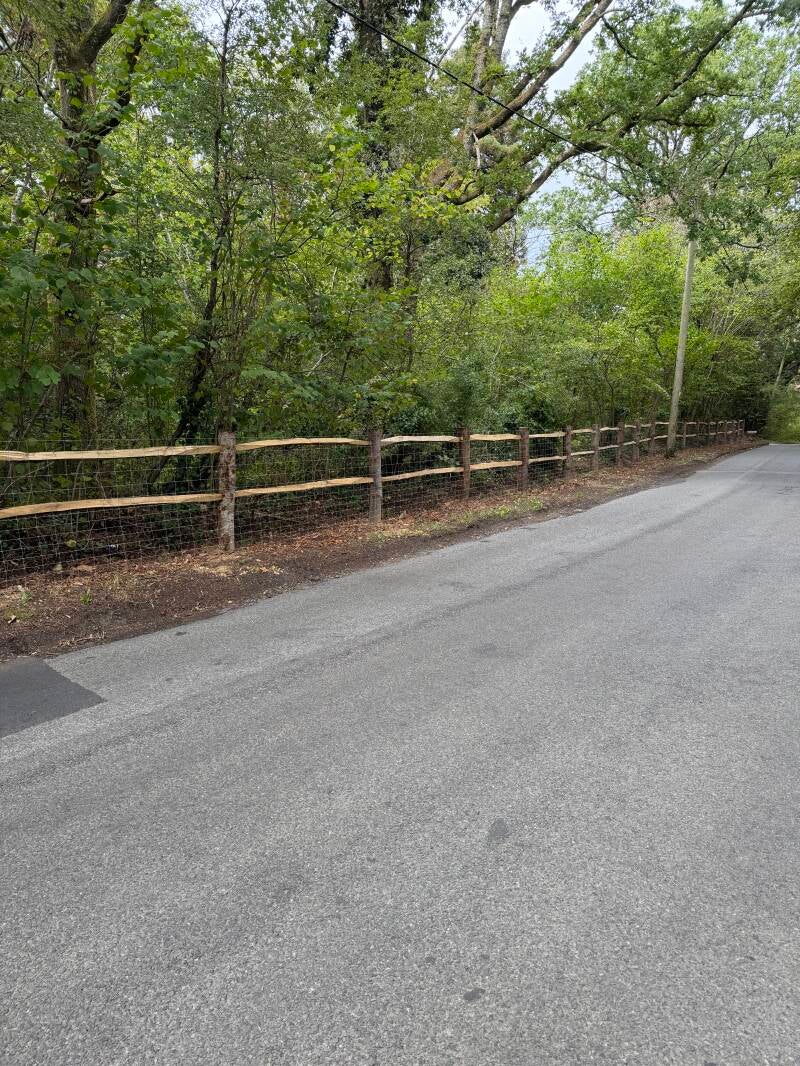
Why choose sweet chestnut fencing?
Whether you’re replacing a few field posts or planning a new post and rail fence, choosing the right timber is a good place to start.
Here at M.G.E Coppicing Ltd in Chiddingfold, we produce sweet chestnut fencing materials from locally managed woodland. From round stakes to cleft rails and mortised posts, it’s a traditional material with plenty of practical uses.
Naturally durable
One of sweet chestnut’s biggest advantages is its naturally durable heartwood, which resists decay and makes it well suited to outdoor fencing without preservative treatment. (cdn.forestresearch.gov.uk, forestrycommission.blog.gov.uk)
How long a fence lasts will depend on the timber, ground conditions and installation. Choosing suitable post sizes and putting them in properly all play a part in getting the best from your fencing.
A style that suits the countryside
Sweet chestnut works well around gardens, paddocks, fields and woodland boundaries. Its natural shape gives each fence a little character, helping it sit comfortably alongside hedges, trees and rural buildings.
Our cleft rails are split along the grain, giving them their distinctive appearance. Paired with mortised posts, they create a traditional post and rail fence that looks equally at home along a driveway or around a field.
Different materials for different jobs
We produce a range of sweet chestnut fencing materials, including:
- Cleft rails and mortised posts for traditional post and rail fencing.
- Peeled and unpeeled round stakes for use with stock fencing and wire.
- Strainers and struts for supporting the ends, corners and changes of direction in a fence.
The right combination will depend on what the fence needs to do, the ground it’s going into and the finish you prefer. If you’re unsure which sizes you need, we’re happy to discuss your project.
Supporting working woodland
In our previous blog, we looked at what sweet chestnut coppicing is and why it matters. Choosing products made from coppiced timber is one practical way to support that cycle.
The harvested stems become useful materials, while the cut stools grow again to produce the next crop. Sales of fencing products help support the work involved in managing the woodland and bringing the timber out.
It also gives customers a direct connection to where their fencing comes from—from the woodland through to the finished posts and rails.
Planning a fencing job?
Whether you need a bundle of stakes, replacement rails or materials for a longer stretch of fencing, get in touch to discuss sizes, quantities and current availability.
Collection is from Yewen’s Hanger, Combe Lane, Chiddingfold. Haulage can also be arranged at an additional cost.
Email: mgecoppicing@live.co.uk
Website: www.chiddingfold-lumpwood-charcoal.co.uk


Add comment
Comments