

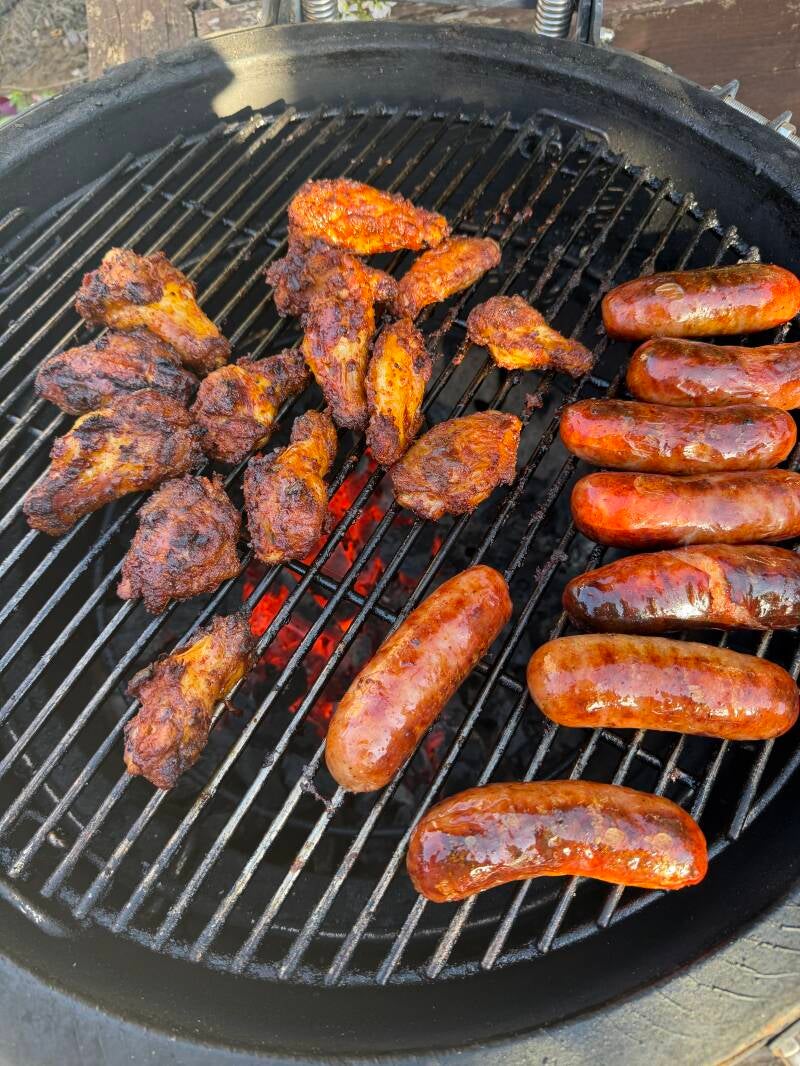
From Woodland to BBQ: Making the Most of Every Tree
When we harvest an area of coppice, not every piece of timber is the same.
Some stems are straight, some are crooked. Some are large enough for fencing, while others are smaller or simply aren’t suitable for a finished fencing product.
For us, good woodland management isn’t just about cutting the crop – it’s also about finding the best use for as much of that timber as possible.
Starting in the Woodland
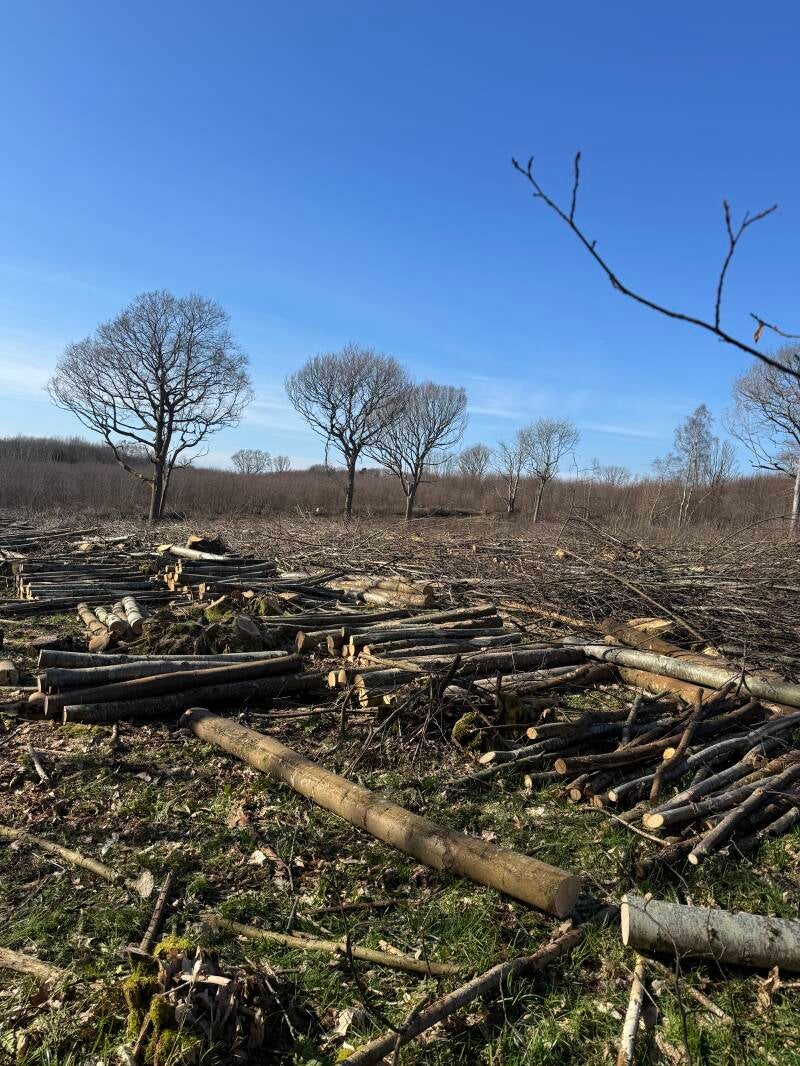
The process begins with coppicing.
When an area of sweet chestnut coppice reaches the right age, the stems are cut close to ground level. The established stools are left in place and begin producing new shoots, starting the next cycle of growth.
The harvested timber is then sorted depending on its size, shape and quality.
This is where different stems – and even different sections of the same stem – can take very different journeys.
Timber for Chestnut Fencing
Sweet chestnut is naturally durable, which makes it particularly well suited to outdoor fencing.
Suitable stems can be processed into a range of products including posts, strainers, rails, pales and traditional cleft fencing materials.
Where we can produce a good-quality fencing product from a piece of timber, that’s generally where we’d like it to go.
But woodland doesn’t grow to a specification sheet.
There will always be timber that’s too small, bent, forked or otherwise unsuitable for fencing. That doesn’t mean it has to go to waste.
Timber for Firewood
Some of this material can be processed into logs.
Cutting and splitting suitable timber for firewood gives us another useful outlet for part of the coppice crop.
It’s a relatively simple product, but it’s another way of turning locally grown timber into something useful.
Timber for Charcoal
Other suitable hardwood timber can make its way into our charcoal production.
The wood is cut and prepared before being loaded into our retort, where it is heated under controlled conditions and carbonised.
What started as British hardwood in the woodland is transformed into natural lumpwood charcoal.
Once cooled, the charcoal is graded and bagged here in Chiddingfold, ready to eventually end up underneath someone’s BBQ.
And Even Biomass Has a Use
There are also parts of the crop that aren’t suitable for fencing, firewood or charcoal production.
Lower-grade timber and suitable woody material can have another destination – biomass.
Biomass provides an outlet for material that might otherwise have very little value, allowing more of what comes out of the woodland to be put to practical use.
It all forms part of the same approach: finding the most appropriate use for the different grades of timber we harvest.
Finding a Use for the Crop
One of the interesting parts of working with coppice is that you’re never dealing with completely uniform timber.
Our job is to look at what comes out of the woodland and decide where each piece is best used.
A straight chestnut stem might become a fence post. Another might be cleft into fencing materials. Other timber can become firewood or charcoal, while lower-grade material can find a use as biomass.
It’s about making the most of the crop we have rather than expecting the woodland to produce only perfect pieces of timber.
From Woodland to BBQ
There’s quite a journey behind something as simple as a bag of charcoal.
It starts with managing British woodland, harvesting the timber and allowing the coppice to begin growing again. From there, the crop is sorted and processed into different products according to what each piece is best suited for.
From chestnut fencing and firewood to biomass and charcoal, we’re working to make good use of the British timber we harvest.
And some of that timber completes its journey here in Chiddingfold as Chiddingfold Charcoal – before ending up underneath a BBQ.


Add comment
Comments